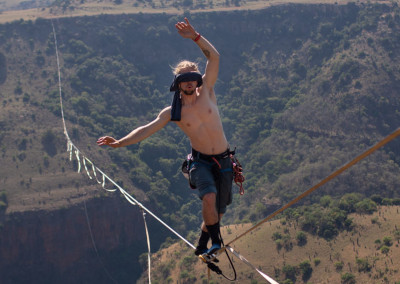
Recently, the ISA published a warning about electrostatic damage to highlines. This reminded me of two moments in my slacklife. One was silly and probably no big deal, but the other is the closest I’ve come to a mainline failure.
The near miss
In 2020 I was organizing a segmented highline rig for the first time. The line was Lurch to Church, a 250m long and 200m high line in Index, WA that is near and dear to my heart. We rigged it on 60m segments of Feather Pro and a segment of Sky Pilot.
A ‘slight’ imperfection
While sending the webbing out, two friends and I noticed a small bump in the main webbing as it was sliding through our hands. We noticed the tip of the bump was blackened like it was burnt. The burnt tip was pinhead-sized. As we kept looking we noticed another burn mark between the pillowed edges and the main body of the webbing.
At the time we debated if they were burn marks and what could have caused them. We figured that 1 or 2 lengthwise strands were compromised which should be a 10% or 20% loss in strength at worst, no? We decided to put tape over the damaged areas to protect them and sent the webbing out. I wish I had taken photos of the damage at this stage.
A surprise after derig
We were weekend warriors and it was time to head back to work, so after sessioning the line for two days, we derigged. In the parking lot we took the covering tape off the damaged spots and noticed the pin head burn mark and burnt pillowed edge had grown into two major tears. Only about half of the webbing remained intact. Obviously we were freaked out.
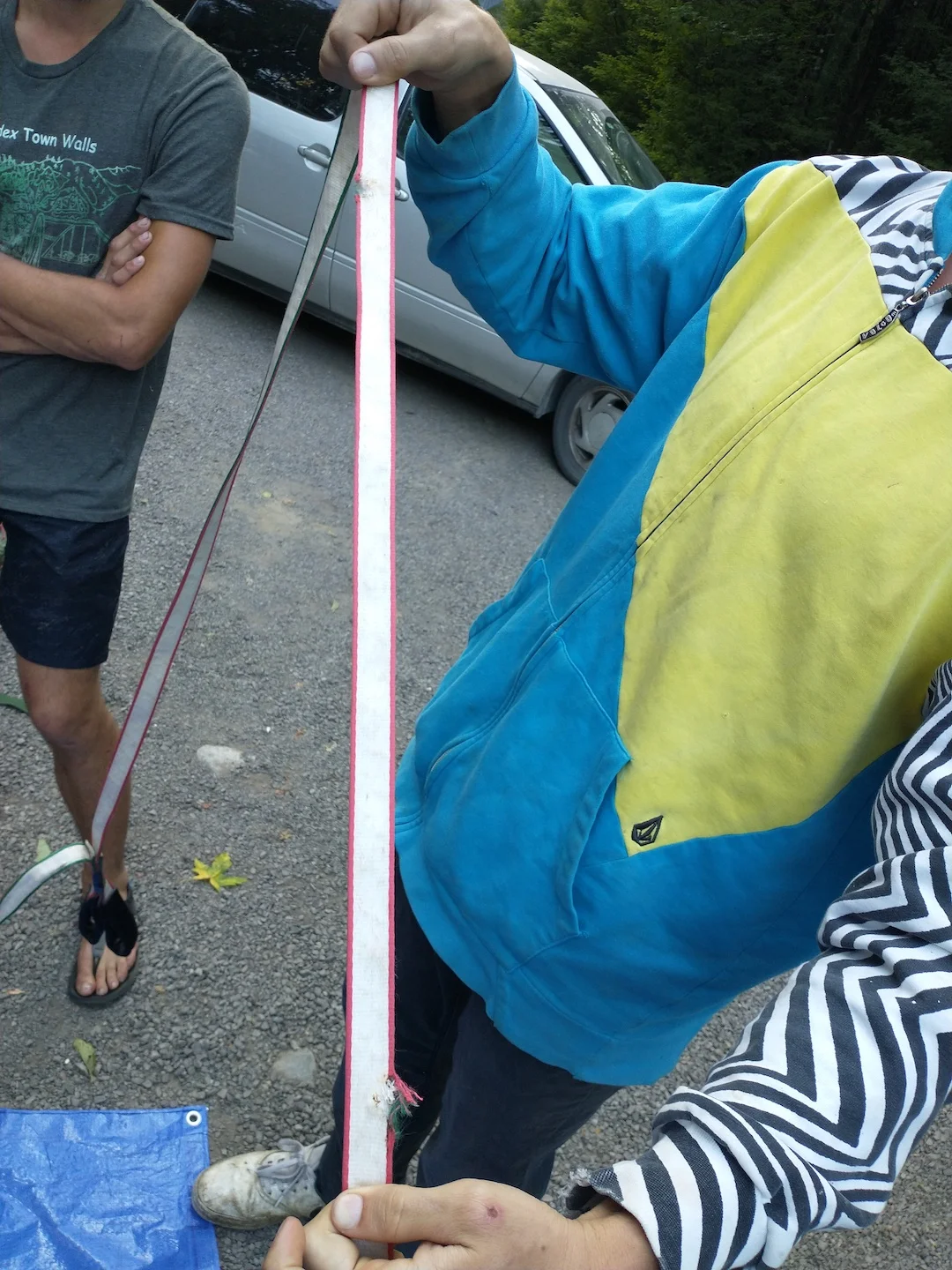
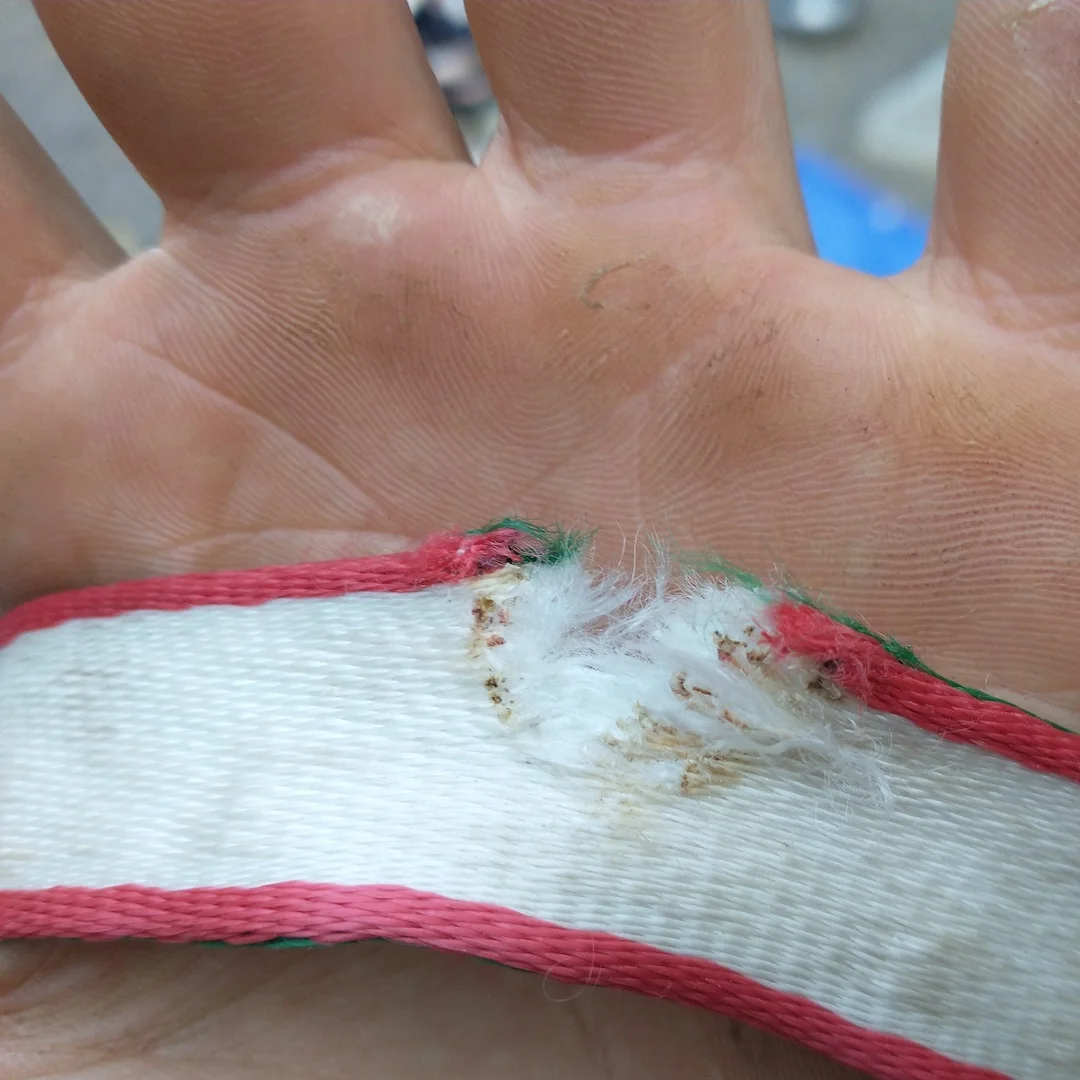
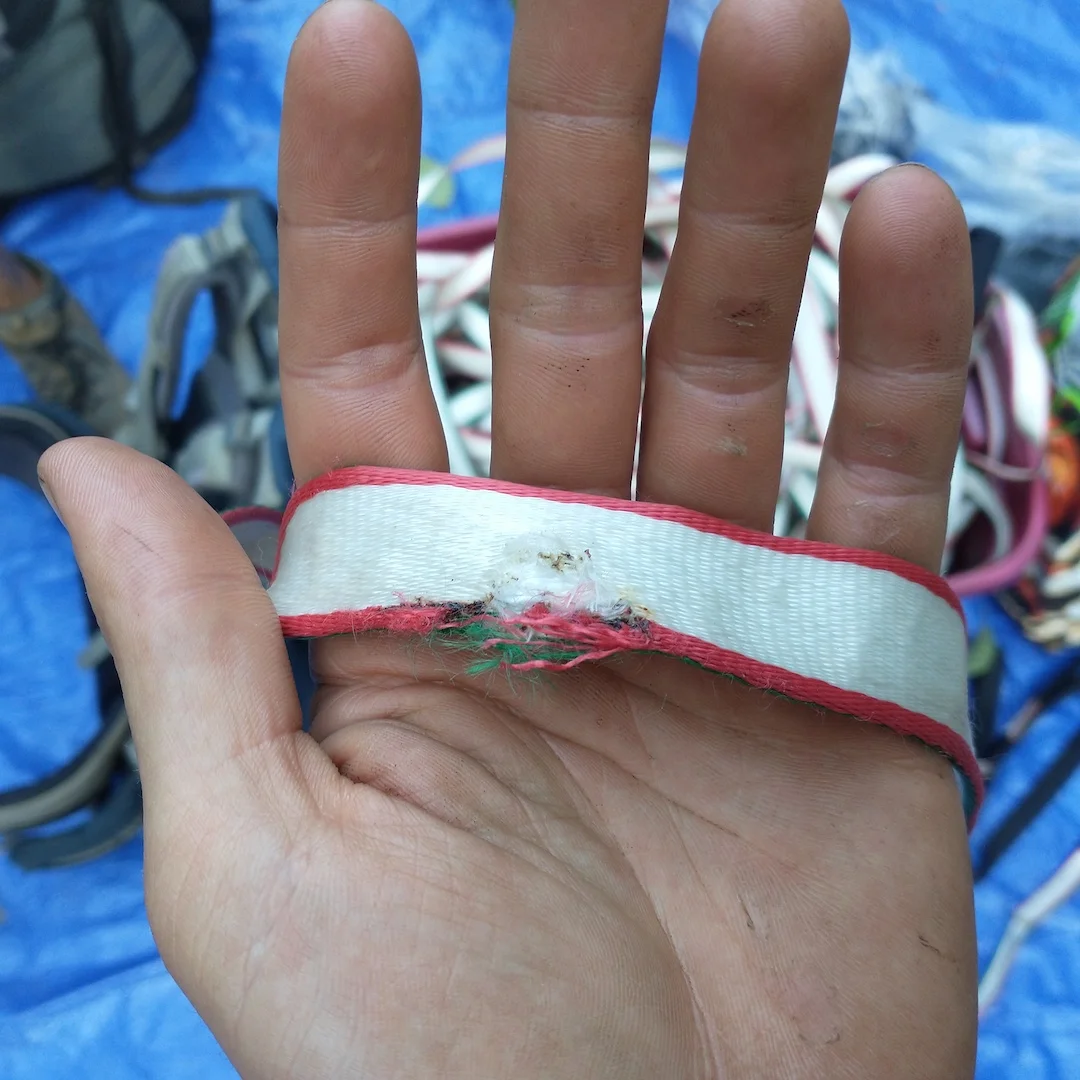
How did this happen?
I had bought the Feather Pro used from a trusted friend and inspected it upon purchase. I didn’t find the burn marks then. The webbing had been rigged on Castleton by this friend and unfortunately left up during a storm. Given what we know now, electrostatic discharge arcing under a tape during that storm is the most likely explanation for the burn marks we found. At the time this theory was around, but not widely accepted. We couldn’t decide if the cause was leash fall damage or static discharge. We had no working model of how electrical charge would pass down a line made of plastic, which should be an insulator.
The right choice would have been to keep that damaged section out of the air, but we were motivated to get the line up and weren’t sure at the time what was up with the burn marks. We had all gathered out at Index, hiked up to the anchors, and devoted our entire weekend to this project. The webbing was already going out. It was easier to decide that the mystery burns were only a minor problem that wouldn’t lead to a failure.
I took the damaged section to Jerry, aka Balance Community, later that year and it failed at 6kn in his break test. If the line had been rigged for even one more day, we likely would have had a mainline failure. On this particular highline, a mainline failure would probably have only led to an extra-large whip for the walker, but this isn’t a risk I’d take again, it’s hard to know what will happen when a line breaks.
Static Hair Day
In 2023 I was walking a 420m perma-rig in Chekamus canyon, Squamish. The line is close enough to some powerlines to hear their buzz. While walking to the home side of the line with 4 leashes tied to my harness, my hair began to stand up straight as if I was touching a plasma ball! I don’t recall there being any storms in the area, but I’m still unsure what caused this particular build up of static electricity, because I’ve walked several leashes back at once before. Perhaps I was sliding my skinner clad feet more than usual? Perhaps the nearby powerlines played some part?

Increasing Safety Margins
It’s good that we now have a theory of how electrical charge can propagate through a highline. I’m more curious about sewing my backups to my mains as the riggers of Ananatopisme did, as well as water-permeable and conductive tapes. Given that backup twists could cause dry spots as well, perhaps these are simply nice-to-haves. It’s likely that getting highlines out of the air whenever a thunderstorm is in the area is the only surefire way to maintain the integrity of a line.
I plan to pick a minimum forecasted distance for thunderstorms as a derig criteria, similar to forecasted wind speed limits. Given that the damage from electrical discharge is minor, and often hidden under tapes, we need to continue to derig any line that has gone through a storm without getting on it. We need to keep watching multiple forecasts and making conservative decisions to get our ‘big’ lines out of the air before storms force us to lower them to the ground unexpectedly or worse.